
THE WELLBEING BULLETIN
| Welcome to the second issue of the newly established Wellbeing Bulletin, where we talk about life, wellbeing and coping strategies for handling a CERTEFL Course! |
“Hey! You there?”
Tips and tricks to help you focus without staring at your (beautiful) wall.
Monday 1st, June 2026 – Issue #2
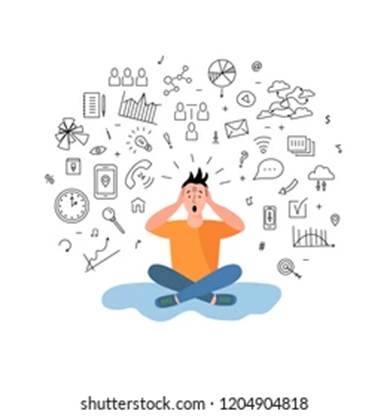
If you are feeling like you are wasting too much time wondering on your lunch choice or, what that latest notification might reveal, while starring at one of the CERTEFL modules, don’t worry. You are not alone. In this article, we aim to unravel the widespread phenomenon of distraction and, we would like to give you some tips and tricks to keep you more engaged with what you are doing.
Staying focused on the same task for more than one minute seems to be humanity’s biggest challenge and, no, this is not an exaggeration. Latest research shows how attention spans are shorter than ever, especially in digital environments. Dr Mark’s book “Attention Span” reveals that that people stay focused on a single screen task between 47 and 43 seconds, down from 2.5 minutes in 2004.
Microsoft’s 2025 Work Trend Index, based on analysis of trillions of productivity signals across its platform, found that employees face a ping from meetings, emails, or chats every two minutes during core work hours-adding up to approximately 275 interruptions per day.
Another study from Reviews.org shows how Americans spent an average of 5 hours per day on their phones, checking their screens 186 times every day.
Naturally, no single cause can be attributed to this massive deterioration that concerns our attention. Though, the digital, fast-paced routines that we are living in today are definitely playing a major role.
As you might wonder, these habits are very harmful for studying. Therefore, online students like yourself are highly vulnerable to distraction, fatigue, and cognitive overload.
So, if you were thinking there was something wrong with your concentration, it’s not your fault. It’s the whole system we live in that has gradually fragmented our mind’s ability to stay focused on the same task for more than 60 seconds.
But that doesn’t mean we can no longer extend our poor attention span, because that is a skill, and as with any skills, we can improve it with practice. So let’s talk about some small habits you can start adopting today, to make a big difference in your study’s quality time.
Set the Stage for Success
Your learning environment matters more than you think. A tidy desk, good lighting, and a dedicated study spot signal to your brain that it’s time to concentrate.
Keep only what you need for the lesson in front of you and remove anything that competes for attention, including your phone.
Break Learning into Short, Focused Sprints
Research shows that attention naturally dips after 20–30 minutes. Instead of fighting it, work with it. Study in short bursts, then take a brief break to reset your mind.
Reduce Digital Distractions
Your device can be your biggest ally—or your biggest enemy. Turn off unnecessary notifications, close unrelated tabs, and use “Do Not Disturb” when studying.
Set Clear, Achievable Goals
Before each session, decide what you want to accomplish. Clear goals help you stay on track and give you a sense of progress, which boosts motivation.
Take Care of Your Mind and Body
Focus improves when you’re rested, hydrated, and mentally refreshed. Short walks, stretching, and proper sleep all contribute to better concentration.
Is our attention doomed?
Staying focused online it’s not about genetics or willpower—it’s about creating the right conditions to slow down our frenetic lives. Due to the fast-pacing world we live in, the challenge is there, but with small, consistent habits, you can transform your online learning experience and get the most out of every course.

